About the research
Gambling among children is a national crisis in Australia. In NSW, nearly half of 12–17 year olds have gambled.
Mobile gambling apps are normalising gambling for kids and teens. The problem is potentially getting worse as more mobile games available to children include paid and free “gambling-like” elements (i.e. loot boxes, random draws and casino features).
Australia’s current policy strategy is not addressing the rapid development of the mobile game sector including how chance and financial risk akin to gambling are commercialised and promoted through mobile media.
Our research aim is to reduce harm from children’s access to gambling by studying how Australian kids use mobile games for “gamble-play”. Gamble-play adds risks and chance to games so players can win rewards, whether or not money is involved.
As 51% of global video game revenue is now generated through mobile games, the potential problems of the increased availability and accessibility of gamble-play mechanics to children are only becoming more urgent.
Our research questions
How is the children’s mobile gamble-play sector constituted in Australia, and how can different types of gamble-play mobile media be categorized across various platforms, games, and apps?
How do children across different age groups relate to, understand, and engage with gamble-play across these categorisations, and what are the key “gateways” to gambling via mobiles?
What media literacy gaps exist between parents/caregivers and their children around these different mobile gamble-play modes, and how can this literacy be enhanced by child-centred strategies and resources?
What are the key gaps in Australian policy around children and gamble-play media, and how does Australian gambling policy in relation to children compare to international policy?
Research Plan
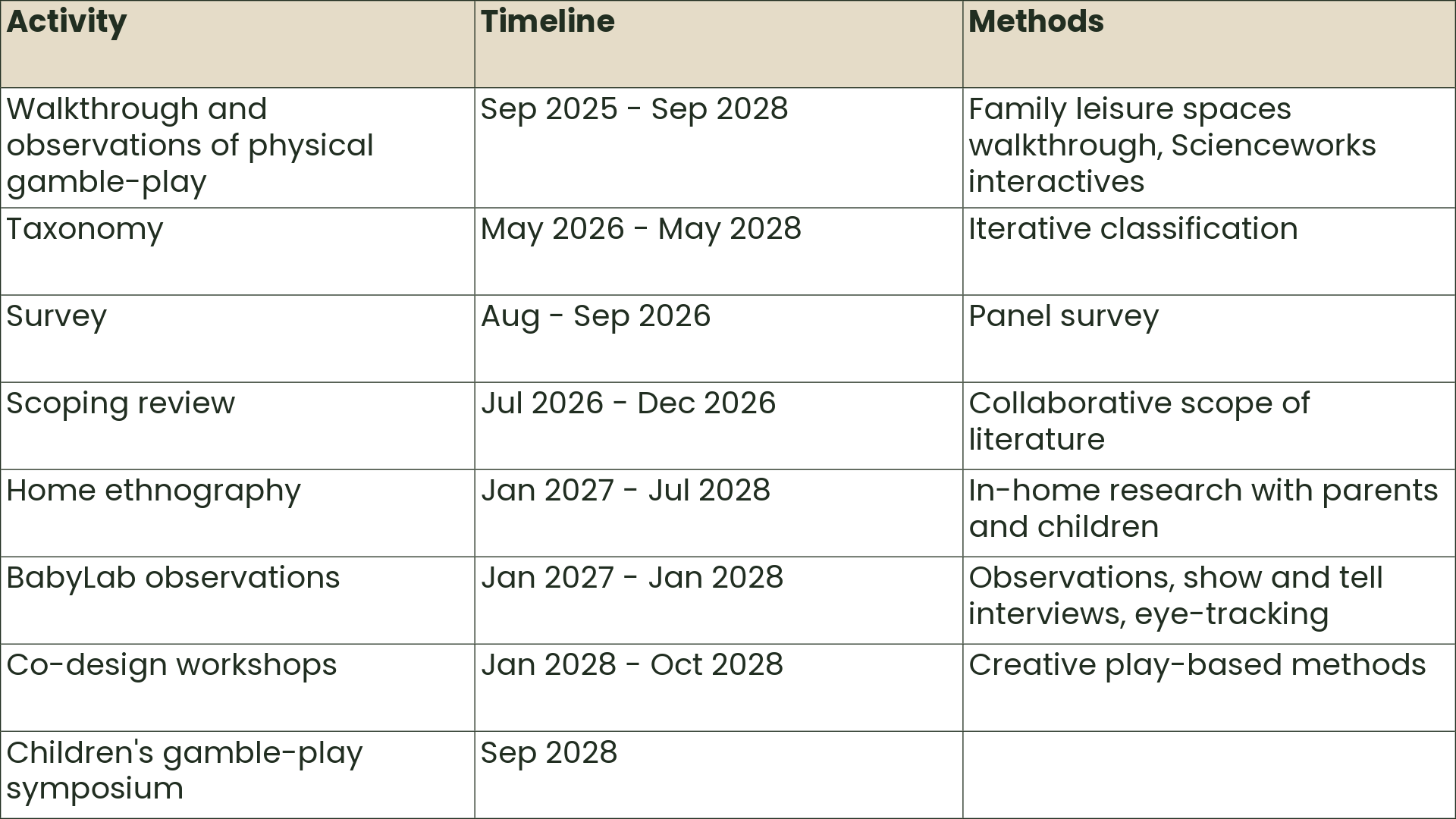
A child-centred approach
To understand how children understand and engage with gamble-play, our research centres children’s agency and rights.